38th Meeting on Thai Mountain Life October 3 Insights on Children Coffee and Cultural Preservation
What happens in the mountains of Northern Thailand cannot be understood through a single story. Children’s education, family livelihoods, local identity, migration, coffee cultivation, and cultural memory all meet in the same hills.
That is why the 38th Meeting on the Life of the Thai Mountainous People, held on October 3, carried meaning beyond a regular gathering. It brought attention to the lived realities of highland communities and asked how outside supporters, local residents, educators, and cultural advocates can work with care.
The meeting centered on two talks. Mr. Miwa reported on the current situation of children in the Northern Thailand Mountains and the role of the Sakura student hostel. Shimizu spoke about the “coffees-cape” connecting mountains across Southeast Asia. Together, the talks placed children and coffee in the same wider frame: community development that respects culture, land, and dignity.

The October 3 meeting continued a long conversation about mountain life
A 38th meeting suggests continuity. It points to years of listening, reporting, questioning, and returning to the same core concern: how highland communities in Thailand can sustain daily life while facing social and economic change.
The October 3 gathering mattered because mountain communities are often discussed from a distance. They may appear in conversations about tourism, specialty coffee, minority cultures, forest conservation, or poverty. Yet those labels rarely show the full picture. A child walking a long route to school, a family weighing whether to send a teenager away for study, or a farmer deciding how to sell coffee beans all face choices shaped by both opportunity and constraint.
The meeting gave space to these connected issues. It did not treat education, agriculture, and culture as separate topics. Instead, it showed how they overlap.
Children’s welfare affects the future of language, ceremony, food traditions, and community memory. Coffee income affects whether families can keep living in mountain areas. Student hostels affect whether children can continue education without being cut off from their roots. Cultural preservation affects whether development feels like renewal or loss.
That is the value of a meeting like this. It gathers practical reports, but it also asks a human question: what kind of support helps a community remain itself while building a safer future?
The phrase “Thai mountainous people” should also be handled with care. Northern Thailand’s highland communities are diverse. They include different ethnic groups, languages, histories, and ways of life. A respectful discussion avoids reducing them to one image. The October 3 meeting offered a chance to look more closely at real conditions, not stereotypes.
Mr. Miwa reported on children in the Northern Thailand Mountains
Mr. Miwa’s report focused on children living in the Northern Thailand Mountains. While each village and family situation differs, the broad concerns are familiar in many highland regions: access to education, distance from schools, economic pressure at home, and the challenge of growing up between local traditions and wider national systems.
For mountain children, school is not only a classroom. It can mean travel, separation, language adjustment, and new expectations. In some areas, children may need to leave home to continue their studies beyond local grades. That shift can open doors, but it can also create emotional strain.
A child who moves for education may gain new skills while losing daily contact with elders, siblings, local language, and seasonal village life. Families may value schooling deeply, yet worry about safety, cost, and cultural distance. These tensions do not have easy answers.
Mr. Miwa’s report placed attention where it belongs: on the current situation of children, not only on abstract development goals. Education matters most when it is connected to a child’s actual life.
Several concerns often sit behind such reports:
School access can be limited by geography, weather, and transportation.
Household income can affect attendance, supplies, and continuity.
Language differences can shape how children experience learning.
Young people may feel pulled between village responsibilities and outside expectations.
Safe housing can make the difference between continuing school and stopping early.
The report also pointed to the role of the Sakura student hostel, which appears to serve as more than a place to sleep. In highland education, a hostel can become a bridge between home and school. It can offer routine, safety, meals, study time, and adult care for children who live far from educational facilities.

The Sakura student hostel serves as a bridge for education and belonging
The Sakura student hostel stood out in Mr. Miwa’s report because it represents a practical answer to a complex problem. When children cannot easily commute to school, safe residential support can protect their education.
A good student hostel does more than provide beds. It creates a stable daily rhythm. That rhythm can include meals, shared study, rest, guidance, and a sense of belonging. For children who are away from their families, these basic supports matter deeply.
The best support also respects where children come from. A hostel that helps students succeed should not ask them to forget their village identity. It should help them carry it with confidence.
That balance is difficult. Children need to learn the language and skills required for broader participation in society. At the same time, they need affirmation that their home culture has worth. If education becomes a one-way road out of the mountains, communities lose future leaders. If education strengthens young people’s ability to return, connect, and contribute, the whole community benefits.
The Sakura student hostel can be understood through this wider lens. Its role is not limited to educational access. It is tied to community continuity.
A student who receives support may later help family members navigate school systems, health services, farming cooperatives, or local leadership. A young person who feels proud of their background may become a bridge between elders and outside institutions. In this way, child welfare and cultural preservation meet.
The meeting’s attention to the Sakura hostel also raised a broader point about community welfare. Support systems work best when they are patient. They build trust over time. They listen to families. They adapt to real needs rather than forcing one model onto every child.
This matters because mountain communities are often asked to change quickly. Markets change. Roads change. School expectations change. Tourism trends change. Climate patterns may affect crops and livelihoods. In that setting, children need steady places and steady adults.
A hostel cannot solve every challenge. It cannot replace family life or village learning. Yet it can reduce the barriers that stop children from continuing their education. It can give families confidence that their children are safe. It can offer young people a path forward that does not require cutting ties with home.
Shimizu connected Southeast Asian mountains through the coffees-cape
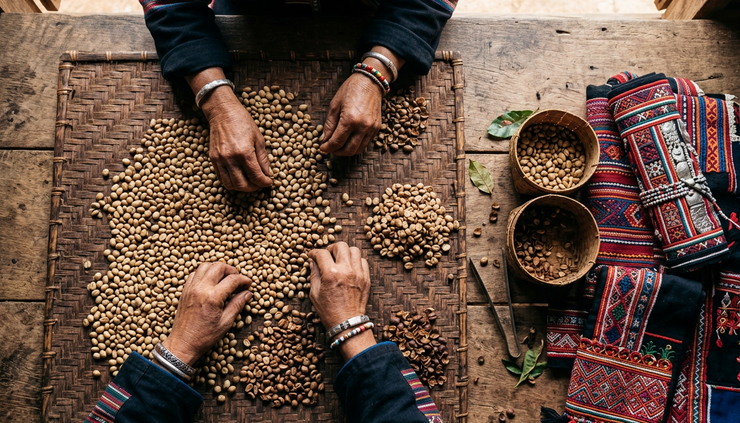
Shimizu’s talk shifted the focus from children’s education to coffee, but the connection was clear. Coffee is not just a crop in the mountains of Southeast Asia. It is a livelihood, a cultural exchange point, and often a link between remote communities and wider markets.
The term “coffee-scape” suggests a way of seeing coffee-growing regions as connected across borders and mountain ranges. Northern Thailand, Laos, Myanmar, Vietnam, and other areas of Southeast Asia each have distinct histories and communities. Yet coffee ties many highland areas together through shared questions:
How can farmers earn fair value from their work?
How can local communities keep control over production choices?
How can agriculture support young people who might otherwise leave?
How can coffee be grown in ways that respect land, water, and local knowledge?
How can buyers understand the human story behind the cup?
Shimizu’s talk appears to have invited listeners to see coffee as more than a product. A bag of beans can carry the story of altitude, soil, family labor, migration, land rights, taste, and trade. The “coffee-scape” links mountains not only through ecology, but through human decisions.
This matters because coffee often enters public attention at the final stage, when it reaches cafes and consumers. The mountain side of the story receives less attention. Farmers and communities do the long work of planting, tending, harvesting, processing, drying, and selling. Their choices shape quality, but market systems often decide how much benefit returns to them.
By connecting Southeast Asian mountains through coffee, Shimizu’s talk encouraged a wider view of development. Coffee can support income, but only if the terms are fair and the benefits stay close to the people who grow it. It can strengthen pride in local place, but only if culture is not turned into decoration for outside consumption.

Coffee also creates social questions inside communities. If it becomes profitable, who controls the land? Who gains from higher prices? Do younger people see farming as a respected future? Are women’s contributions recognized? Are traditional practices protected or replaced?
These questions show why coffee belongs in the same conversation as education and culture. The future of highland children is tied to the future of local livelihoods. If farming can provide dignity and income, young people may have more choices. If local economies weaken, education may become a route out with little path back.
Shimizu’s “coffees-cape” framing also helped connect communities beyond national borders. Mountains do not follow political lines neatly. Families, crops, languages, and trade routes often have histories that reach across them. Coffee offers one way to understand those connections without flattening differences.
Community development and cultural preservation must grow together
The strongest message from the October 3 meeting was that community development and cultural preservation cannot be separated.
Development without cultural care can create loss. It may bring roads, schools, markets, and income while weakening language, memory, and local authority. Cultural preservation without material support can become fragile. It may celebrate heritage while leaving families without enough options for education, health, or income.
The meeting’s two main themes showed a better path. Mr. Miwa’s report asked how children can be supported in real life. Shimizu’s talk asked how mountain communities connect through coffee and livelihood. Both pointed toward development that begins with people, not projects.
For children, this means education that strengthens identity rather than erasing it. For families, it means livelihood options that do not force a choice between survival and belonging. For communities, it means cultural preservation that lives in daily practice, not only in performances or museum displays.
Some of the most meaningful forms of preservation are ordinary:
speaking a home language with children
teaching farming knowledge through participation
preparing seasonal foods
maintaining rituals and community gatherings
sharing stories about place and ancestry
involving young people in local decision-making
These practices need time, confidence, and economic stability. That is why student support and coffee livelihoods matter. They shape whether culture can continue as part of life.
The meeting also offered a reminder for supporters outside these communities. Good intentions are not enough. Support has to be grounded in listening. It has to respect local leadership and avoid treating mountain people as passive recipients of help.
When discussing children, the focus should stay on their dignity and potential, not on pity. When discussing coffee, the focus should include the workers and families behind the crop, not only flavor or market appeal. When discussing culture, the focus should honor living communities, not freeze them in the past.
The phrase 38th Meeting on Thai Mountain Life October 3 Insights on Children Coffee and Cultural Preservation captures a wide set of concerns, but those concerns belong together. Children, coffee, and culture are not separate chapters. They are parts of the same community future.
A meeting that points toward shared responsibility
The October 3 meeting did not need to offer one final answer to be meaningful. Its value came from bringing connected realities into the same room of attention.
Mr. Miwa’s report on children in the Northern Thailand Mountains highlighted the need for safe, steady support, including the role of the Sakura student hostel. Shimizu’s discussion of the coffees-cape widened the frame to show how mountain communities across Southeast Asia are linked through agriculture, trade, and shared challenges.
The takeaway is clear. Community welfare grows when education, livelihood, and cultural memory are treated as connected. A child’s future depends on more than school access. A coffee farmer’s future depends on more than market price. A culture’s future depends on more than preservation in name.
Support that lasts begins with respect: for children, for families, for local knowledge, and for the mountain communities that continue to shape their own futures.


Comments